
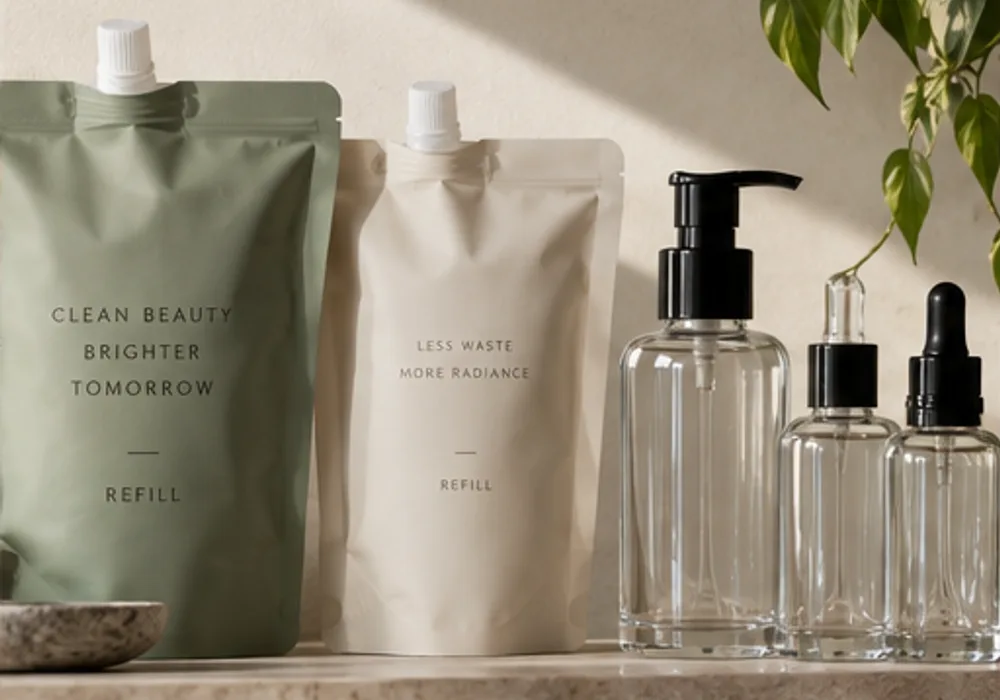
The second purchase is the test
A refill looks appealing in a launch photo, but its environmental and commercial story depends on whether customers actually buy it again. If the refill is hard to find, messy to use, or nearly the same price as a new container, the durable outer pack may simply become another object in the bathroom.
Brands should design the refill route alongside the first bottle. The customer needs to know where to buy it, how to transfer it, and which parts can be reused or discarded. A QR code cannot carry the entire explanation.
Be specific about materials
Less packaging by weight is not the same as widely recyclable packaging. A light pouch may reduce shipping weight while being difficult to process locally. A glass bottle may be easy to keep but heavy to transport. The tradeoffs depend on the complete system and the customer’s real behavior.
Claims should say exactly what changed: for example, a smaller replacement pack or a reusable pump. Broad words such as “green” tell a less useful story than a clear description of the parts and their disposal instructions.
Design for habit
The strongest refill experience is almost boring: the top opens easily, the transfer is clean, and a reorder reminder arrives before the original runs out. If a brand wants a refill to become routine, convenience belongs in the sustainability conversation.