
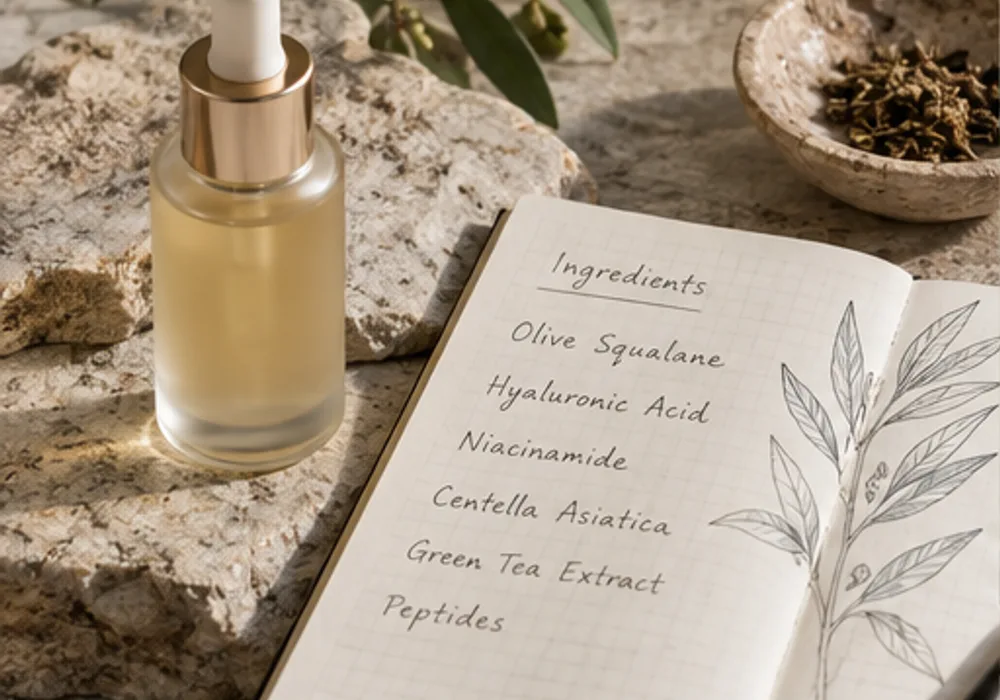
A list answers only one question
An ingredient panel tells a shopper what is in the bottle. It rarely explains why each ingredient is there, how the formula feels, or which claims the finished product can support. Brands that treat the list as the entire transparency story leave customers to fill those gaps with search results and guesswork.
The better approach is a short explanation beside the list: which ingredients provide the main cosmetic function, which support texture or preservation, and which choices were made for scent or appearance. This is useful even when the answer sounds ordinary. A stable formula and a pleasant texture are product benefits, too.
Explain the formula, not an isolated hero
A familiar ingredient can behave differently across formulas. Vehicle, packaging, and the directions for use all shape the experience. An honest product page can describe the intended routine and avoid implying that one ingredient guarantees a result on its own.
It can also say what the product does not do. A hydrating serum may make skin feel more comfortable without replacing sunscreen, treating a condition, or performing like a prescription product. That boundary makes the product easier to recommend responsibly.
A practical transparency test
Before launch, ask someone outside the formulation team to read the product page. Can they identify the product’s job, the order in which to use it, whether it contains fragrance, and the limits of the claim? If not, the copy needs another pass. Transparency succeeds when a customer can make a decision without decoding laboratory shorthand.