
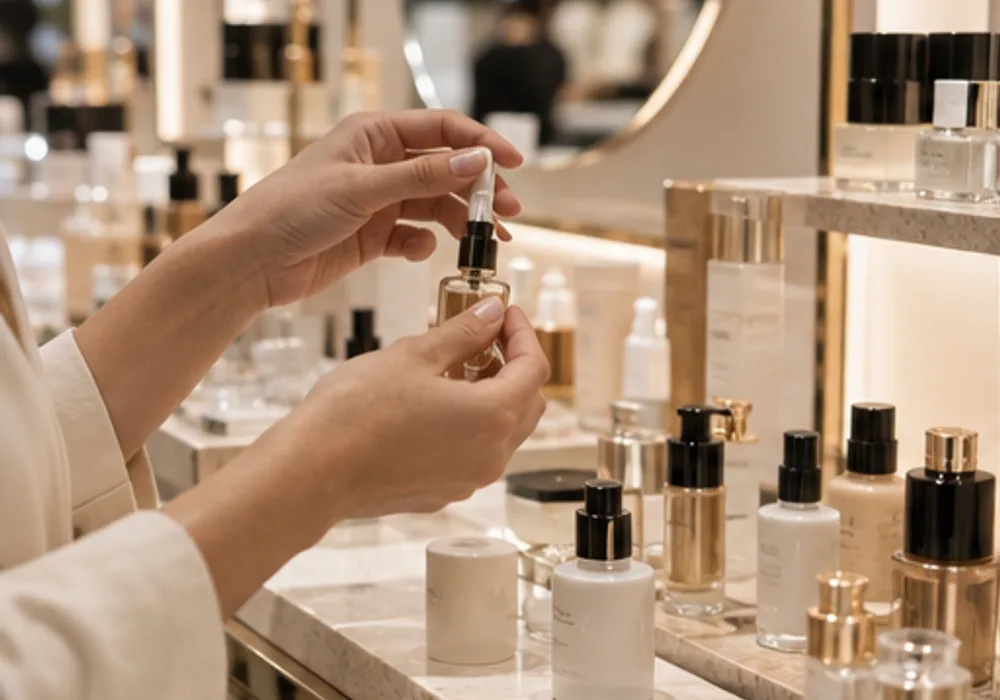
Define the uncertainty
A fragrance customer wonders how a scent develops on their skin. A foundation customer wonders about shade and finish. A serum customer may care most about texture under makeup. One sample format cannot answer every question equally well.
A good sampling program starts with the uncertainty that blocks purchase. That may mean a scent vial with several uses, a foundation card covering neighboring shades, or enough skincare to test texture across a few routines. The goal is information, not simply distribution.
Keep the next step obvious
The sample should identify the full product, directions, and a straightforward route back to the exact item. Confusing names or missing shade details waste the moment when a shopper is ready to decide. If the sample is a different formula or concentration from the retail product, that difference needs to be plain.
Learn from the right signals
Counting samples handed out says little about whether they were useful. Follow-up questions, repeat visits, and the reasons people decline a full-size purchase are more instructive. A smaller sample program that resolves a real hesitation can be more valuable than a large giveaway no one remembers.